
KTH takes over the chair of Stockholm Trio
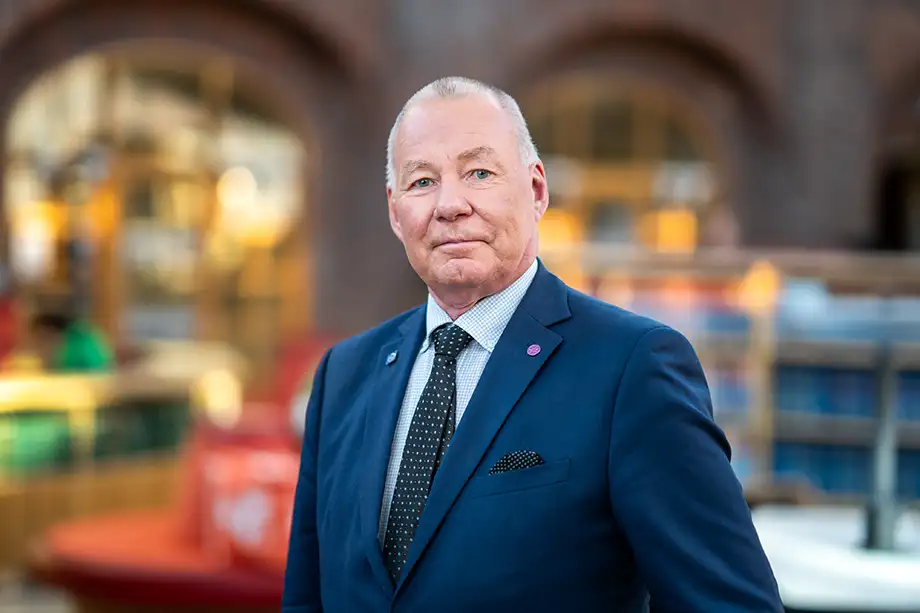
Hello, Anders Söderholm, President of KTH. It’s now your turn to take over as Chair of Stockholm Trio.
Which joint issues should the alliance give particular priority to over the coming year nationally, and at EU level?
“The EU’s forthcoming Framework Programme for Research and Innovation will enter its final negotiations over the coming year. Creating opportunities to influence that process is therefore a key priority, the Stockholm Trio’s joint representation in Brussels is an important resource in this work. We also need to continue highlighting the crucial role our three universities play for the Stockholm region and Sweden. Our contribution to growth and academic excellence needs to remain firmly on the agenda.”
At the Stockholm Trio’s seminar “World-class research” during Almedalsveckan, you highlighted SciLifeLab and MedTechLabs as examples of how long-term commitment and collaboration can create strong research environments. How can Stockholm Trio develop more such environments to strengthen the Stockholm region as a centre of knowledge and innovation?
“When our three higher education institutions collaborate, we create strong research environments. In addition to successful collaborations, such as SciLifeLab and MedTechLabs , we are now working together to establish a Centre for Medical Radiation Science , with the aim to strengthen Stockholm's and Sweden's position in precision radiation therapy for cancer. The Swedish Research Council has also recommended that the government award strategich research area funding (SFO) to the Stockholm Centre for Climate Transition (ClimTrio) . This initiative will bring together leading research in the social sciences, natural sciences, technology, and medicine across our three universities, with the aim to provide knowledge and evidence to support the transition to a fossil-free society.”
In a recently published opinion piece , you and the Presidents of Stockholm University and Karolinska Institutet warn that high premises costs risk diverting resources away from research and education, particularly in the Stockholm region. What consequences could this have for Stockholm as a knowledge-intensive innovation region?
“The current system is both dysfunctional and harmful to Sweden, particularly when it comes to developing Stockholm as a leading knowledge and innovation region. Our three universities pay significantly higher rents per square metre than universities in many other parts of the country, without receiving any corresponding compensation in their funding. The detrimental effects of the model for the provision of premises have become apparent in recent years. This issue must be addressed by our funding bodies so that that the quality of research and education is not put at risk.”
Text: Stockholm Trio/Tora Zeijlon