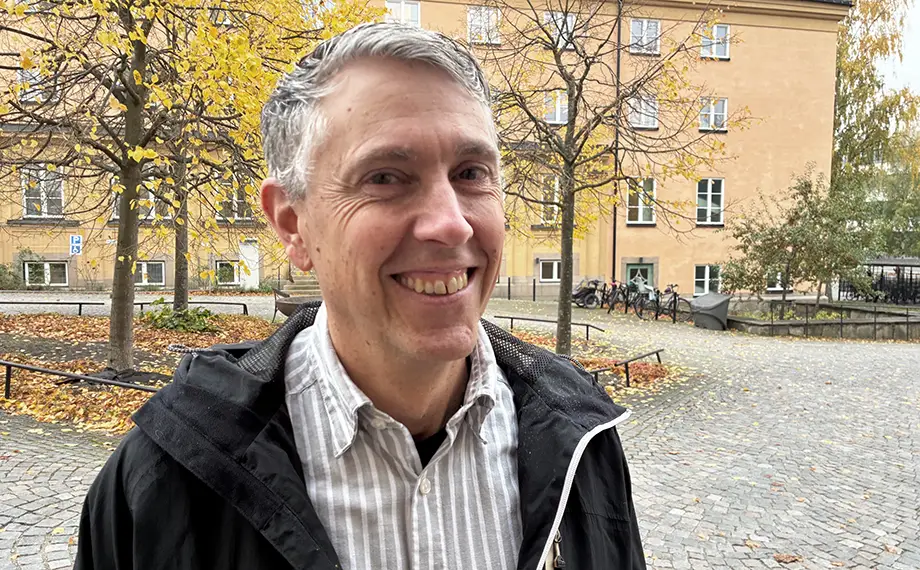
The salary review is in full swing at KTH – but did you know that work on salaries continues all year round? Anders Jansen, who is responsible for salary formation in the HR Department, explains how salaries are set and dispels some of the most common misconceptions about the process.
It is salary review time, and annual salary dialogues between employees and managers are currently taking place across KTH.
“What many people don’t know is that work on salaries continues throughout the year, following a clearly defined annual cycle, in line with the approach taken by other government agencies,” Jansen says.
He emphasises that this work is carried out jointly with KTH’s trade unions, and that all the preparations for the autumn salary review take place during the spring semester.
According to Jansen, several misconceptions about salary setting circulate at KTH, and addressing them can be challenging. One example is the belief that there is a dedicated pot of money available for salary increases.
“At KTH, we do not negotiate a local pot for the salary review. We have to work within the central agreements concluded between the Swedish Agency for Government Employers and the trade unions at national level. These agreements are based on local salary formation, with individual and differentiated salary setting and no guaranteed increases for individual employees.”
Other factors, Jansen explains, include salary developments in the wider labour market and KTH’s financial circumstances.
“There is no separate budget for the salary review. It is funded from KTH’s overall resources.”
Jansen stresses that, during the salary review, both managers and employees should think in terms of the new salary and the salary as a whole, rather than focusing on the size of the increase in kronor or as a percentage.
He mentions a few other common misconceptions: that salaries are higher in other departments than in one’s own, that people earn more at other universities, and that new recruits join on higher salaries than existing employees.
Text: Marianne Norén
A few comments from the trade unions
Malin Björk
Is there anything you would like to improve in the joint work on salaries between the employer and trade unions going forward?
Malin Björk, ST:
Generally, we in ST feel that we have a good dialogue with the employer in our joint work on salaries at KTH. That said, there is always room for improvement. The new salary system, for example, is challenging to use, both during the salary review and for the salary analysis we carry out in the spring. In the previous system, we could log in ourselves to see, for example, how an individual’s salary had developed over a longer period. This is not possible in the new system, so we depend on our negotiating counterparts to provide that information.
Nelli Jokinen
How do members’ experiences and views feed into this work?
Nelli Jokinen, LO/SEKO:
Through ongoing dialogue with our members, we gain an understanding of the salary process and how it works in practice across the organisation – beyond how it is intended to work.
Olav Vahtras
Which issues are most important to you when representing members in the pay-setting process?
Olav Vahtras, Saco-S
ay should be determined on objective grounds, based on the pay criteria jointly agreed by the parties. The manager responsible for setting pay should provide a clear justification for their decision.
KTH’s year-round work on salaries: how the employer and trade unions work together
At the beginning of the year, HR and the trade unions jointly evaluate the previous year’s salary process to identify improvements. The new salary review cycle then begins.
During the spring semester, the working group reviews operational requirements and staffing and skills needs, examines salary levels at competing organisations and assesses KTH’s financial circumstances. The group reviews salary principles and local salary criteria and agrees on the timetable for the autumn.
A salary analysis is carried out to identify individuals or groups whose salaries stand out in some way. These deviations are reported to the schools and to the University Administration (VS), which is treated as a school for this purpose. The schools must explain why the salary of a particular individual or group stands out. If there are no objective grounds for the difference, the employer must adjust the salary level.
The group also compares salary levels across the schools and, within the University Administration, across its departments. The Heads of School are then briefed on salary levels at their own school and how these compare with KTH as a whole.
Based on the findings of the analysis, the President and Deputy President can then decide whether targeted salary adjustments are needed across KTH, rather than at individual schools – for example, for a particular staff category.
After the summer, the autumn salary review process begins. Every employee has a salary dialogue with their immediate manager to discuss their work performance. Employees who are members of Saco-S are also entitled to a salary-setting dialogue with their manager.