
Low-Rank Approximation based Tractography: From Tensor Algebra to Learning Anatomical Priors
Time: Thu 2024-11-28 15.00
Location: Room 7-7320, Hälsovägen 11C, Huddinge
Video link: https://kth-se.zoom.us/j/260826362
Language: English
Participating: Prof. Thomas Schultz (University of Bonn, Germany)
Contact:
Diffusion MRI tractography reconstructs white matter tracts in the human brain from noninvasive measurements, and is widely used in surgery
planning and neuroscience. This talk will introduce low-rank higher-order tensor approximation as an accurate and computationally efficient mathematical framework for tractography. It will also present recent and ongoing work on integrating this framework with learning-based approaches. In particular, unsupervised learning permits a substantial further increase in speed, while supervised learning accounts for anatomical prior knowledge in a way that is shown to generalize from healthy subjects to cases with severe pathology.
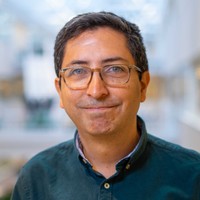
Juan Eugenio Iglesias is Associate Professor of Radiology at the Martinos Center for Biomedical Imaging (Massachusetts General Hospital and Harvard Medical School), where he directs the Laboratory for Ex Vivo Modeling of Neuroanatomy (LEMoN) and co-directs the Center for Machine Learning with Dr. Matt Rosen. Dr. Iglesias also has affiliate appointments at University College London (UCL) and the Massachusetts Institute of Technology (MIT). His research lies at the intersection of artificial intelligence and neuroimaging. His work has enabled the analysis of brain MRI data at a superior level of detail, as well as the application of research neuroimaging methods to scans with low in-plane resolution – including clinical and portable MRI scans. Dr. Iglesias holds MSc degrees in Electrical and Telecommunication Engineering from the Royal Institute of Technology (KTH, Stockholm, Sweden) and the University of Seville, respectively. He completed his PhD in Biomedical Engineering at the University of California, Los Angeles (UCLA) in 2011. He is the recipient of a Fulbright Science of Technology Award, a Marie Curie fellowship, a Starting Grant of the European Research Council, and several NIH grants.