
Innovating Thermal Energy Storage: Insights from the KTH–Kyoto Group Collaboration
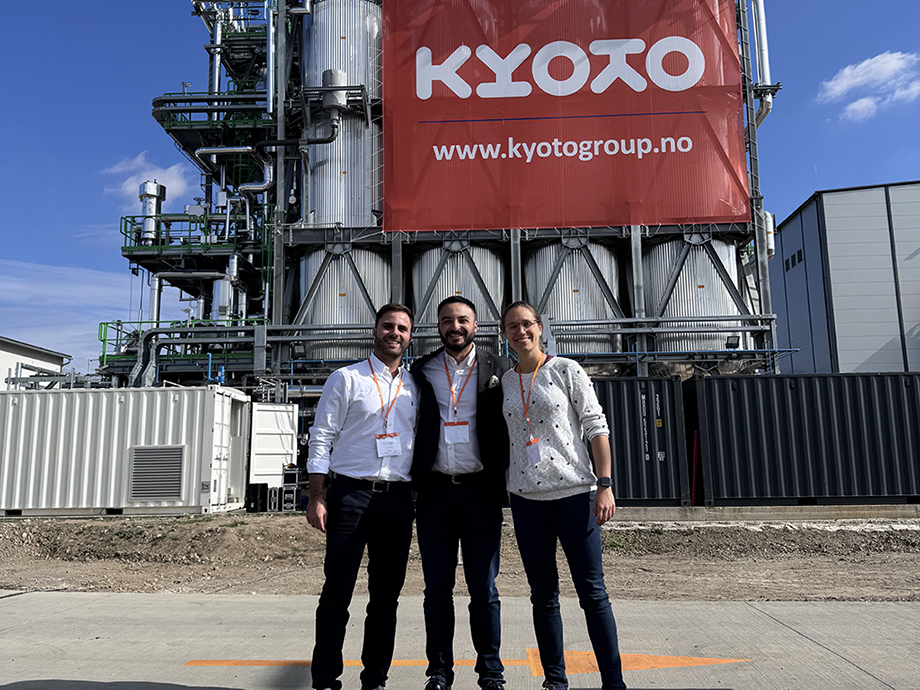
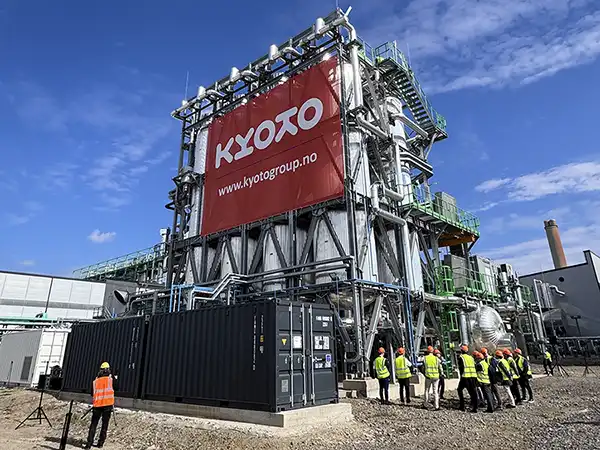
KTH and Kyoto Group, a Norwegian leading thermal battery company, have maintained an ongoing research collaboration since 2022, with the latest milestone of the industrial partner being the inauguration of a Heatcube, a thermal energy storage system, in Hungary earlier this autumn.
Kyoto’s Heatcube storage system provides a green and cost-effective solution, capturing and preserving renewable energy and converting it into heat to generate steam, using a modular technology that exploits the use of molten salts. The technique leads to replacing natural gas and cutting up tons of CO₂ emissions, serving as a foundation for empowering industries with renewable thermal energy, especially when considering that more than half of the energy consumed by industries is in the form of heat.
The newly built installation in Hungary acknowledges deployment of one of Europe’s largest industrial thermal energy storage systems, and provides a platform for joint forces, as the partners have signed a further three-year strategic agreement. The new agreement includes an establishment of a lab infrastructure with molten salts at KTH Energy Department in Stockholm.
"Our collaboration with KTH provides unbiased performance validation and early insight into technologies that will influence cost and efficiency in the coming years. It strengthens our research capacity, supports talent development, and directly contributes to the next generation of Heatcubes,” explains Morten Bülow, CEO at Kyoto Group.
Building on the momentum, the first components of the new shared lab - the “first of its kind” in a Nordic University – have arrived in KTH, signaling the next phase of the collaborative research The official inaguration of the new lab is planned for 2026.
The new lab infrastructure will enable testing and development of integrated molten salt systems and components at a relevant scale, including pumps, valves, electric heater units, heat exchangers, novel optimized tanks configurations, interconnections, instrumentation and measurement equipment, and even media composition and their compatibility.
The academic-industrial co-creation model has several advantages. It enablies access to highly qualified graduates and supports systematic exploration of emerging technologies and ultimately offers innovations that substantially influence sustainability and cost-effectiveness within the field of thermal energy.
Furthermore, the joint collaboration supports performance validation of Heatcubes through data analysis, helping to improve their operation and disseminate insights through peer-reviewed articles in leading journals. The performance analysis and validation work for the newly inaugurated Heatcube is expected to begin next year as part of the collaboration.
Text: Rita Nõu