
KTH introduces carbon dioxide budget for air travel
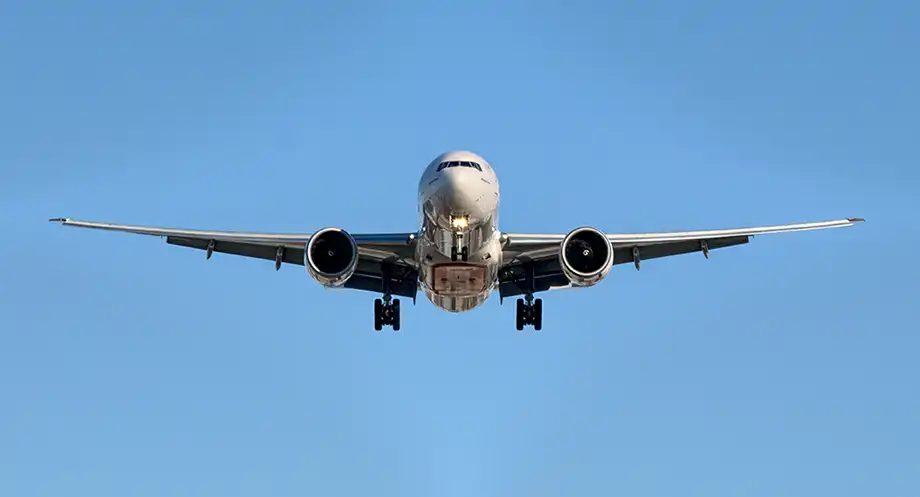
KTH is now taking a new step in its efforts to achieve its climate goal. The President has decided to introduce a carbon dioxide budget for emissions from air travel undertaken on business or paid for by KTH.
This decision will take effect on 1 January 2026, with the aim of reducing the organisation's climate impact in line with the Paris Agreement. This equates to an annual reduction in emissions of 8% until 2045 compared to 2019 levels.
“Everyone must do their part to reduce emissions, and this is a way to plan travel together and take shared responsibility,” says President Anders Söderholm.
A tool showing emission data
A visualisation tool will allow managers and employees to access emissions data per organisational unit and see how they are doing in relation to the available emissions allowance. This is based on the expected annual reduction.
'The basic idea is to use the tool to gather facts about our actual travel and open up increased awareness and dialogue on these issues,” says Kristina von Oelreich, KTH's Sustainability Manager.
The carbon budget will be planned and monitored annually and included in the action plans of the schools and operational support. The responsibility for allocating the emission allowance within each area of activity lies with the Heads of Schools and the University Director.
One of the largest sources
"As I have said many times before, it is not about stopping travel, but rather about finding ways to travel more smartly and efficiently while contributing to the climate goals that we as an authority have to adhere to," von Oelreich says.
The background to this is that KTH's climate report shows that air travel continues to be one of the largest sources of emissions. Since 2023, a university-wide development project has therefore been conducted in collaboration with researchers, schools and operational support.
Text: Jill Klackenberg