Every year we welcome several visiting scholars and other academic staff. Some come to teach in courses or in other ways collaborate with us, others come mainly to do their own research. One thing they all have in common is that they become a big part of the Division
Davide De Lillis
Davide is a multidisciplinary artist, curator, and Feldenkrais practitioner, currently a PhD candidate at Roma Tre University and the Accademia Nazionale di Danza (Italy) in the programme Cultures, Practices and Technologies of Cinema, Media, Music, Theatre and Dance. He holds an MA in Choreographing Live Art from the University of Lincoln (UK) and a postgraduate degree in Environmental Humanities from Roma Tre University.
At the Environmental Humanities Laboratory at KTH, he will further develop his doctoral project, which investigates how representations of nature in screendance can contribute to ecological discourse. During his stay, he will work on the theoretical framework of the project and on the development of an experimental screendance work as part of his practice-based research. He will also facilitate a workshop aimed at fostering interdisciplinary dialogue between artistic research and environmental humanities.
Period; January-June
Alexander Damianos
Dr. Alexander Damianos is a researcher and lecturer in environmental law at Kent Law School, University of Kent. His monograph Science, Politics and the Anthropocene Working Group: What was the Anthropocene? (Routledge 2025) presents the first ethnographic study of the effort to formalise the Anthropocene as a unit of the Geologic Time Scale. He is an associate research fellow at the Institute of Advanced Legal Studies of the Univeristy of London, where he leads the
Ecologies of Care reading group
as part of the new Law and the Environmental Humanities Network. In 2025, he founded
Ecological Translation
, a non-profit company, which hosts its inaugural event at Goethe Institut Athens on April 28th and 29th. His research has appeared in journals including Αυτόματον, Law & Critique, Global Sustainability and Social Studies of Science.
Period: February-April
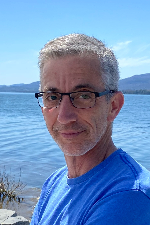
Jacob Tropp
Jacob Tropp is Professor of History and John Spencer Professor of African Studies at Middlebury College in Vermont (USA). He earned his Ph.D. in African history, with a secondary field in Native American history, at the University of Minnesota, where he was a funded scholar in the MacArthur Interdisciplinary Program on Global Change, Sustainability, and Justice. His dissertation research on social and environmental history in the Eastern Cape of South Africa was the basis for his 2006 monograph Natures of Colonial Change: Environmental Relations in the Making of the Transkei (Ohio University Press) as well as several articles published in African history journals. Over the past several years, his research has concentrated on the transnational dimensions of particular Native American histories in the mid- to late 20th century – focusing on health, the environment, and development. This work has appeared in theJournal of Global History, Comparative Studies in Society and History, the Journal of World History, and a forthcoming special issue (Spring 2026) on "Radioactive Empires" in Regeneration: Environment, Art, Culture. This research has been supported by the American Philosophical Society, the American Council of Learned Societies, and visiting fellowships at the Centre for Humanities Research, University of the Western Cape (Bellville, South Africa) and the Rachel Carson Center (Munich, Germany).
Period: March-April
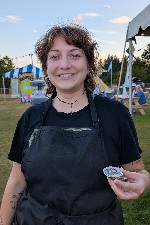
Philine Schiller
Philine Schiller is a doctoral researcher in the culinary environmental humanities with a background in literary and American studies. She is part of the research group “Off the Menu” at the University of Augsburg, Germany, which interrogates the relationship between eating and ecology – how human appetites transform environments. Her research project examines the rise and fall of North American oyster industries, the gastronomic history of the oyster, the threat of culinary extinction, the narrative potential of recipes and cookbooks, and the ethics of (eating) endangered foods. She holds a teaching degree in English and Spanish Philology from the University of Heidelberg, Germany, and can be reached at philine.schiller@uni-a.de
During her stay at the EHL, she will present her research in an interactive format, work on her dissertation, and familiarize herself with Swedish oysters and their culinary history.