In 2025, three CBH associate professors were promoted to professors: Christofer Lendel, Patrik Ståhl and Per-Olof Syrén. Here they talk about their research.
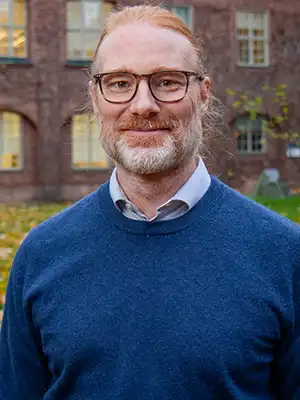
Christofer Lendel, Department of Chemistry
Photo: Jon Lindhe
The ability of protein molecules to form fibre structures is central to many biochemical processes, ranging from dementia diseases (e.g. Alzheimer's) to the design of new bio-based materials.
In my research, I investigate how we can manufacture and control the properties of such protein fibres from agricultural raw materials. I am also interested in whether there are any fundamental differences between these fibre structures and those formed in our bodies when we fall ill.
The hope is that in the future we will be able to deliver new materials that can facilitate the transition to a sustainable society. These could be materials that replace environmentally problematic materials (e.g. oil-based plastics) or that have a function that can help solve environmental challenges (e.g. water purification).
Another important area is the food sector, where the structural properties of proteins can play a significant role in the taste experience.
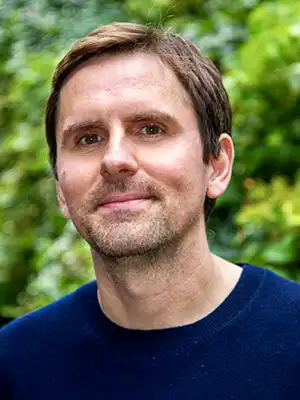
Patrik Ståhl, Department of Gene Technology
Photo: Jon Lindhe
In my research group for applied genomics, we develop single-cell and spatially resolved methods that make it possible to see how genes are active in different parts of a tissue. In this area, particularly through spatial transcriptomics, we have contributed to important international advances.
By combining molecular biology, image analysis and machine learning, we can map gene expression directly in the tissue's original environment and thus gain a more detailed understanding of how organs function and how diseases arise. Our research is characterised by an experimental and curious approach.
We are constantly refining our methods to achieve higher resolution, increased efficiency and broader applicability in both research and future clinical applications.
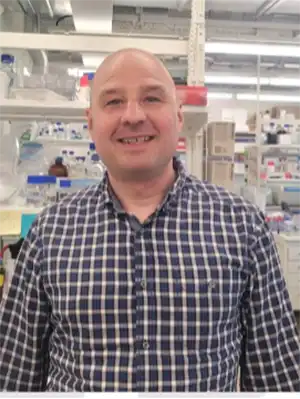
Per-Olof Syrén, Department of Fibre and Polymer Technology and SciLifeLab
I develop new, sustainable ways to manufacture and break down chemicals and materials by combining organic chemistry with tailor-made enzymes.
Together with my team, I design proteins that can, for example, help recycle plastic, convert biomass into useful molecules and replace fossil-based processes.
By combining experiments, computer modelling and close collaboration with industry, we strive to enable greener production of medicines, materials and everyday products – and show how precision chemistry can contribute to a more circular and healthy society.