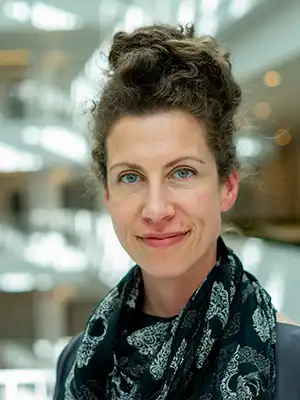
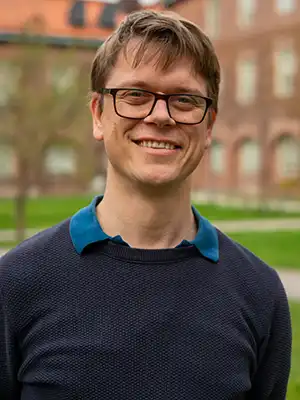
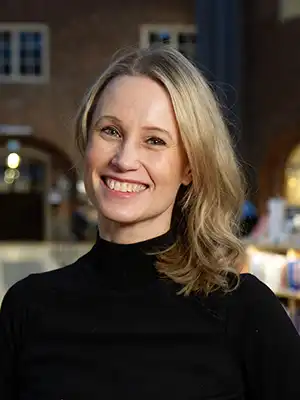
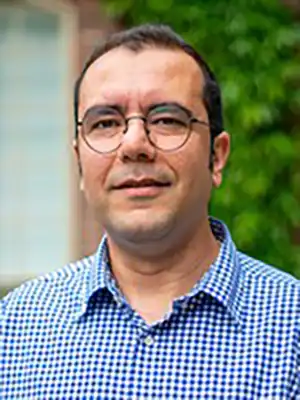
Catherine Trask, Department of Biomedical Engineering and Health Systems
Catherine’s research in the area of occupational health and safety has two main themes: 1) measuring exposure to musculoskeletal risk factors, and 2) evaluating interventions designed to reduce those exposures.
Workplace risk factors for the development of musculoskeletal disorders are often characterized by cumulative exposure with variation in level, magnitude, and duration; this can present challenges to developing sampling strategies that efficiently assess that exposure.
High exposures that represent unacceptable risk need to be controlled with workplace interventions, but such interventions need to be thoroughly evaluated to ensure they not only reduce exposure, but also have favourable or acceptable impacts on work process and finances. This summary of findings on these two topics will describe the ongoing research problems and suggest solutions through highlighted examples.
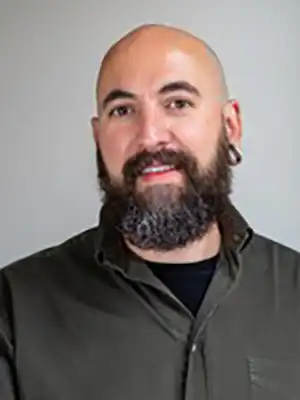
Tomas Rosén, Department of Fibre and Polymer Technology
My research focuses on how complex fluids and particle suspensions behave in flows, from nanometre to millimetre scale.
Such systems are everywhere – for example, in biological flows such as blood and in processes for new sustainable materials based on cellulose.
I combine advanced experiments, especially X-ray-based methods at synchrotron light facilities, with numerical simulations and machine learning. This allows me to track individual particles and structures in otherwise opaque flows and see how they organise themselves over time.
An important goal is to link experiments and calculations in so-called digital twins, which provide new physical understanding and better opportunities to control material processes.
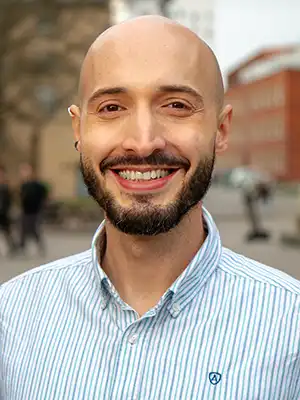
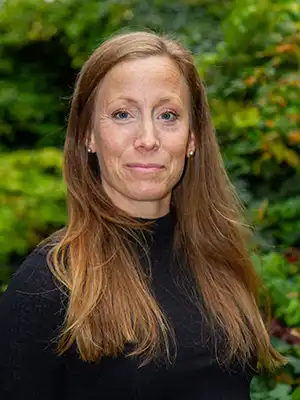
Antonio Capezza, Department of Fibre and Polymer Technology
Photo: Jon Lindhe
Our daily lives still depend on porous plastics made from fossil fuels. Our research at the BioRESorb team focuses on creating a cleaner alternative. By turning renewable biomass into lightweight, porous materials, we aim to replace these plastics without sacrificing performance.
We use energy-efficient processing methods that work on standard plastic industry equipment, making the transition to greener materials more realistic. The bio-based materials we develop break down completely within weeks in water or compost, leaving no microplastics behind.
We are now moving toward new applications, including degradable filters and smart foams that release nutrients or medicines in a controlled way. The goal is simple: practical materials that do their job and then return safely to nature.
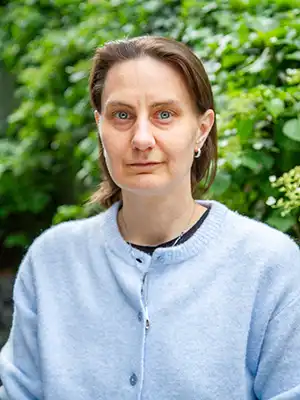
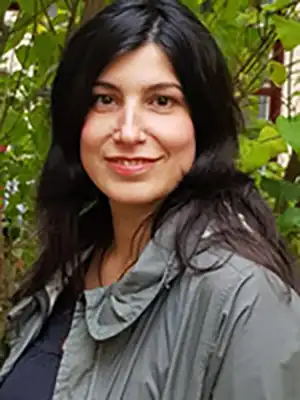
Anniina Vihervaara, Department of Gene Technology
Photo: Jon Lindhe
My lab tracks RNA synthesis across genome at nucleotide-resolution. We use i) acute stress responses, ii) differentiation, and iii) disease models to trigger a transcriptional change. Then, we monitor how cells instantly reprogram RNA synthesis across genes and enhancers (stress), how transcription program changes when the cell gains a new identity (differentiation), and what goes awry during diseases.
Our research is deeply involved in biochemical and computational technology development, and we go after the molecular mechanism that coordinate RNA Polymerases, cell-state transitions, and cell identity. E.g. we track how the transcribing RNA Polymerase complexes change, nucleotide-by-nucleotide, as they proceed from the initiating nucleotide (+1nt), through pause-regulation, into elongation and termination.
Currently, we are expanding to various organisms and host-pathogen interactions.
Sanna Kuoppamäki, Department of Biomedical Engineering and Health Systems
Photo: Jon Lindhe
My research explores and designs inclusive AI technologies for healthy living with a particular attention to demographic changes caused by the ageing population. I investigate how AI technologies, such as recent advancements in Large Language Models, shape the autonomy, agency and identities of vulnerable populations in the context of health and social care.
Through participatory design methodologies, my research involves vulnerable users, such as older adults, children or caregivers in AI development. I am interested in exploring the individual and socially shared practices embedded in the use of emerging technologies, and the mutual shaping of technologies in everyday life to contribute to more inclusive and transformative technologies.
My research can be utilised in both technical development and policy-making in shaping sustainable and equal digital society.
Frederico Marques Penha, Department of Chemical Engineering
Dr. Fred Marques Penha’s research focuses on crystallization, membrane technologies, and process integration and intensification. A key research focus over the past 5 years has been the recovery of critical raw materials from secondary sources (mining waste & urban mining), addressing major technological bottlenecks to enable high-purity products from residues that can re-enter industrial value chains.
Their work also investigates the fundamental mechanisms behind crystallization from multicomponent solutions, and membrane-intensified processes and applies these insights to challenges such as recovery of nutrients from wastewater.
Magdalena Malm, Department of Protein Science
Photo: Jon Lindhe
Biological medicines, including various affinity proteins and gene therapies based on viral vectors, enable specific treatment of many different diseases.
Protein engineering further enables the development of more advanced biological medicines with tailor-made properties. However, more advanced therapies may also lead to the need for more adapted and tailor-made cell factories for their production in order not to limit the clinical development or availability of these drugs.
My research focuses on improving both biological drugs and their cell factories for production. A particular focus is on research into the combination of affinity proteins and viral vectors for more precise targeting, as well as mapping and improving two of the most commonly used mammalian cell factories, CHO and HEK293, for the production of biological drugs.