
“Our core activities are where we need to allocate the most resources.”
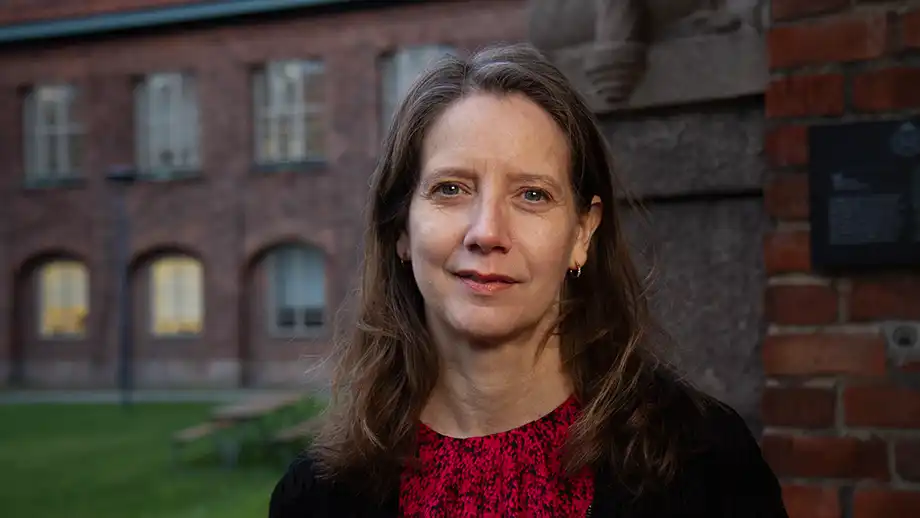
Like other schools, CBH has done an annual update of the three-year reform agenda, which is part of KTH's operational plan. Head of School Amelie Eriksson Karlström talks about the work ahead with the school's four focus areas.
What is the focus of the reform agenda for the coming year?
"We don't have a single focus, but continue to have activities in four different areas: education, research, study and work environment, and efficient use of resources. We have taken the previous version as a starting point and updated it."
“In education, we are continuing to work on the range of courses and experimental environments, pedagogical development and sustainable research education. There are many important aspects, so it is difficult to highlight any one in particular. Some things are common to KTH, such as maker environments. This is an activity that we are continuing to work on at CBH. We have a functioning environment in Flemingsberg, but we will ensure that all students on our various programmes have access to experimental environments."
"One thing that is extremely important is that we have started a needs and skills inventory of the school's teachers to see in which areas we will need to recruit to handle upcoming retirements. Here, it is important to be able to link the needs within education to the research areas that will be important going forward."
What should the school achieve in its activities?
"Our core activities are where we must devote most of our resources, continuing to conduct good research and provide good education. An important issue for the future is access to research infrastructure, where we want to look at possible new models for financing the infrastructure and its operation. The problem is that it is expensive to run infrastructure and purchase new instruments. How can we coordinate this so that we can finance and utilise the infrastructure in a good way?"
"When it comes to the issue of premises, we need to continue trying to reduce premises costs, and one way could be to work towards more efficient use of premises. Here, we need to collaborate across institutional boundaries and with the property department to find new solutions."
Why are these changes the most important ones to make, and how will they be implemented?
"For all activities in the reform agenda, we will try to specify clearly what needs to be done and appoint responsible persons. In some cases, we may need to set up working groups that can work on the issues in project form, while other things may be done within the framework of regular work."
"Both the management of research infrastructure and the recruitment of teachers are issues for the future. There are no urgent needs, but it is a matter of starting in good time and building for the future. Other issues, such as reducing premises costs due to our continued financial constraints, are more immediate. Developing our range of courses and experimental environments is important if we are to remain attractive to students in the future and keep up with developments."
Text: Sabina Fabrizi (
sabina@kth.se
)