
The Docent Committee presented its new organisation
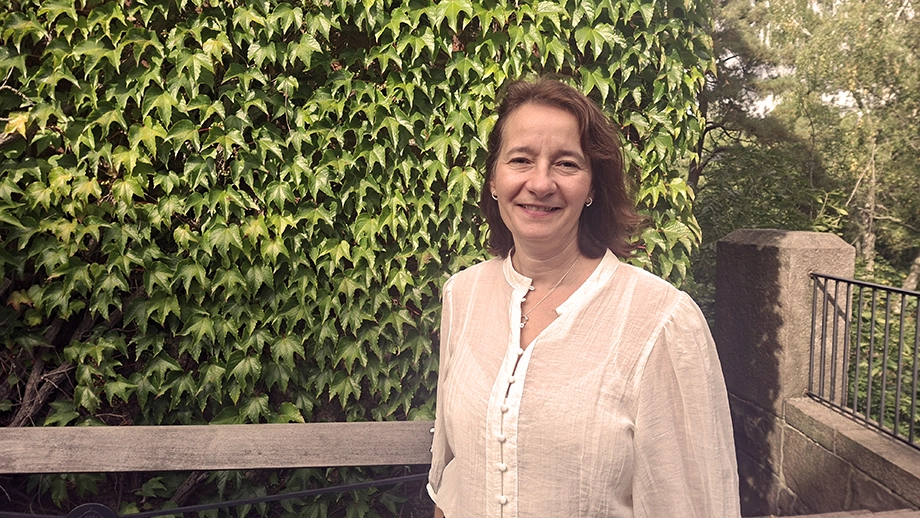
A new organisation for the handling of docent applications and an upcoming quality review of master's programmes were two of the issues discussed at the latest meeting of the CBH Faculty Board.
At the Faculty Board meeting on 26 August 2026, Andrea Eriksson, Chair of the Docent Committee, presented changes to the Committee's working organization and to the process for obtaining the title of docent. The Faculty Board had previously tasked the Committee with reviewing and improving the process for handling docent applications.
"We want the process of having the scientific and pedagogical qualifications required for a docent title assessed to be as clear, efficient, and swift as possible. Previously, there have been delays, and the process has taken more than a year," says Cristina Al-Khalili Szigyarto, teacher representative on the CBH Faculty Board.
An Extensive Process
A faculty member may apply for a docent title as formal recognition of their qualifications to teach at a university. Once an application has been received, the Docent Committee oversees the process leading up to the Head of School's decision. According to Cristina Al-Khalili Szigyarto, assembling a docent review committee and recruiting qualified external reviewers is an extensive process, ensuring that the assessment is conducted independently and with high quality.
"The follow-up on the assignment went well. They had successfully developed a better organisational structure for handling cases in order to avoid conflicts of interest. They have also shortened the time from application submission to decision. It was encouraging to see that things are improving," she says.
Feedback Submitted
Before the summer, KTH's working group led by Sofia Ritzén, Dean, and Nina Wormbs, Vice Dean, circulated a proposal for a new appointments procedure for consultation. The CBH Faculty reviewed the proposal and provided feedback. The proposal was discussed at the School Information Meeting on 25 May, where faculty members had the opportunity to submit comments. At the Faculty Board meeting, the Head of School presented a summary of the comments and the consultation response that had been sent to the working group.
"This is extremely important and affects a large part of the faculty. It concerns career opportunities, job responsibilities, and employment prospects, as well as the requirements for promotion," says Cristina Al-Khalili Szigyarto.
Overall, the School is positive about the proposed appointments procedure. The Faculty welcomes clearer and more transparent guidelines regarding the requirements for each career level, as well as the recognition of teaching excellence and academic citizenship alongside scientific excellence. The CBH Faculty has also pointed out a risk of confusion between different academic positions, such as Assistant Professor and Associate Professor, as well as challenges in translating certain titles into English.
Review of Master's Programmes
During autumn 2026, an external peer review of the master's programmes within CBH's biocluster will begin. According to a KTH decision, a peer review of first- and second-cycle education must take place before the programme review scheduled for the end of 2028. The Faculty Boards have been tasked with deciding when and how these reviews will be conducted. Markus Kärkäs and Mark Rutland presented the review process developed by the GA leadership, led by Director of First and Second Cycle Education Torbjörn Gräslund and the Faculty Board's working group.
"This is a way for the Faculty Board to work strategically with educational quality. A pilot project is being launched in which the master's programmes within the biocluster will be reviewed first. The aim of the pilot is not only to evaluate the programmes but also to gather knowledge on how the process can be improved over time. Other programmes will be reviewed next year. This is important because we want the review process to be useful and closely connected to day-to-day operations. We do not want to simply produce reports; we want to work actively with educational quality and be able to follow up on it easily in the coming years," says Cristina Al-Khalili Szigyarto.
The Faculty Board also decided to initiate a recruitment process at the Department of Protein Science and to appoint an affiliated faculty member at the Department of Fibre and Polymer Technology.
Collaborations and Discussions
Several other topics were also discussed during the meeting.
"We also received an update on admission figures. CBH has reduced the number of places across all programmes by approximately 10 percent. What we are seeing is that demand for our programmes has remained strong, with only a few exceptions. A further update will be provided once we know which students have actually enrolled," says Cristina Al-Khalili Szigyarto.
Cristina Al-Khalili Szigyarto also notes that the Faculty Board is engaged in ongoing discussions with the Research Support Office (RSO) regarding support services. A number of meetings have been held with the aim of improving support during the research funding application process.
"This is one of the pressing issues for many members of the faculty. Many funding bodies have extensive application procedures with different rules and requirements that sometimes change. Researchers may need support with aspects of their applications relating to KTH's research environment, project management, and legal matters, rather than the research itself," she says.
The Board is also planning discussions with KTH's IT Department to ensure strong IT support for teaching activities and the storage of research results.
Text: Sabina Fabrizi ( sabina@kth.se )