
2026 Alfvén Lecture
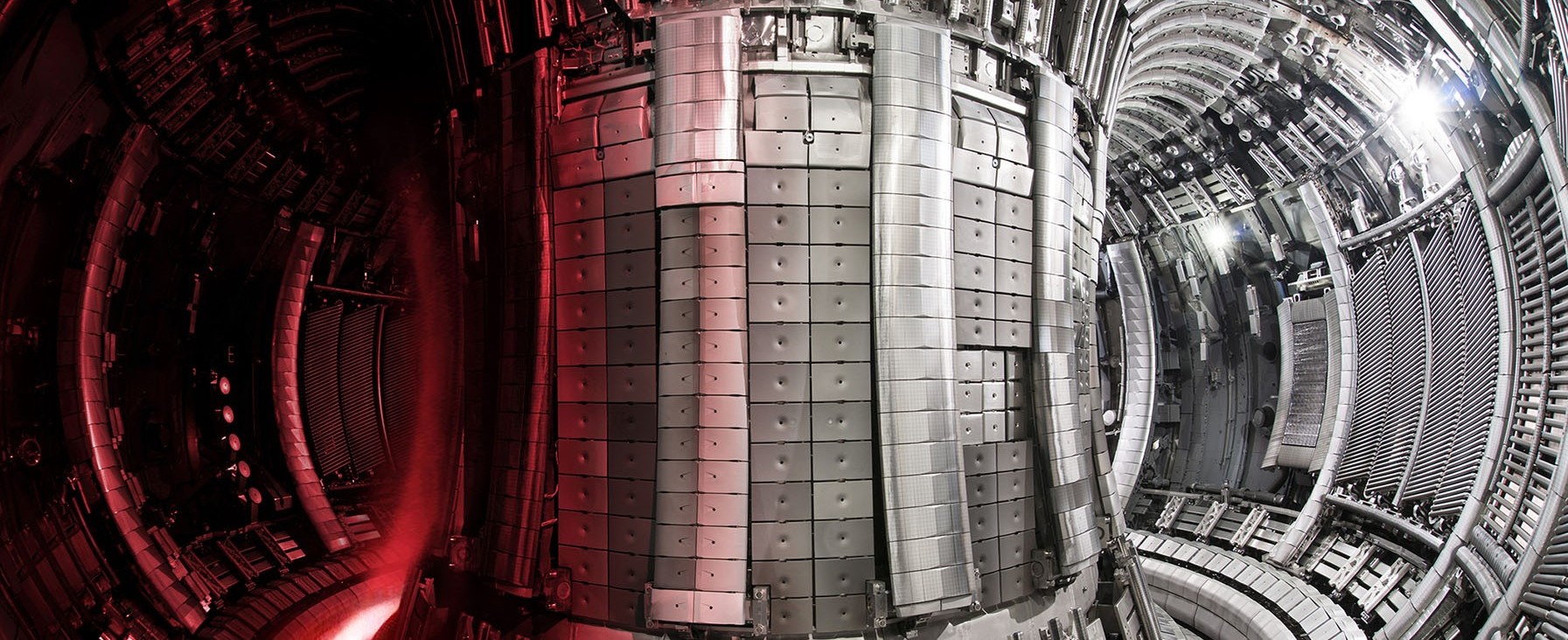
The Alfvén Lecture 2026 given by Dr. Costanza Maggi, United Kingdom Atomic Energy Authority, Culham, The United Kingdom
Tid: To 2026-10-08 kl 15.30 - 16.30
Plats: https://www.kth.se/places/room/id/19814134-e285-49bc-9683-2f5c2edadbcf

Recent research at JET: bringing fusion energy closer
Speaker: Dr. Costanza Maggi
Location: Lecture hall K1, Teknikringen 56
Date & Time: 8th October 2026, 15:30-16:30 (Coffee is served outside of the seminar hall from 15:00)
Hosts:
- Anita Kullen, Head of the Department of Electromagnetics and Plasma Physics, KTH
- Mark Pearce, Prof. Department of Physics, KTH and KTH Space Center
- Lorenzo Frassinetti, Prof. Department of Electromagnetics and Plasma Physics, KTH
Poster: Alfven_2026.pdf (pdf 823 kB)
Abstract:
The JET tokamak has been at the forefront of fusion research since its first plasmas in 1983. Over the past 20 years JET has been the largest operating tokamak in the world, exploring conditions approaching those expected in a thermonuclear reactor. Amongst these was the capability to operate with Tritium and Deuterium-Tritium (D-T) fuel, the fuel mixture of ITER (the international fusion experiment under construction in France) and fusion power plants. In order to accelerate ITER’s research plan, in 2021 JET exploited these unique features, coupled to the new metallic wall installed in 2011, to carry out a second major D-T campaign (JET DTE2), after DTE1 carried out in 1997 with a carbon wall. A third D-T campaign followed in 2023. These new ambitious D-T experiments represented the culmination of a series of JET enhancements and of preparatory experimental campaigns accompanied by an unprecedented predictive modelling effort with advanced plasma transport models. DTE2 was complemented by a sequence of physics campaigns to study the dependence of plasma transport and plasma-wall interactions on the main ion isotope mass (hydrogen, deuterium, tritium and their mixtures), topics of fundamental importance for accurate extrapolations of plasma behaviour from JET to future thermonuclear reactors. The recent JET experiments have yielded the most fusion reactor relevant plasmas to date, expanding our understanding of isotopes and D-T mixture physics and supporting fusion technology. Beyond establishing new world records for the highest D-T fusion energy achieved, the most significant output of these experiments is the wealth of new physics results and the validation of current models in unique and ITER-relevant conditions. In my talk, after an introduction on magnetic confinement fusion, I will report on highlights of this recent fusion energy research at JET in support of ITER and future fusion power plants.
The lecture is supported by the Royal Swedish Academy of Sciences through its Nobel Institute for Physics