“We should have relevant, sought-after education programmes that lead to employment”
At mid-year, a new director of first and second cycle education (GA) and a new deputy director of first and second cycle education (deputy GA) will take office at the ABE School. Current GA and deputy GA, Eva Liedholm Johnson and Malin Wennerholm, share their experiences, future insights, and tips. Nominations are open until 30 January 2026.
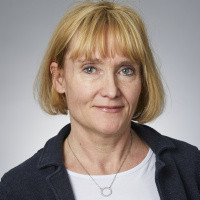
Malin Wennerholm, deputy GA and GA since 2019, previously programme director for the architecture programme and master's programme in architecture.
What has been most rewarding during your time as deputy GA?
“It's been great working with all the cool colleagues I've met in my daily work as GA, in various roles and contexts: student representatives, operational support, heads of school, heads of department, directors of third cycle education, administrative managers, the ABE School leadership, directors of first and second cycle education at other schools as well, Future Education, and KTH's management. But the very best thing is the ABE community – we explain things to each other to understand each other's habitats and educational reality in daily work.”
“As the person responsible for seven years for ABE School's vibrant undergraduate education, which handles absolutely crucial questions for the world – from water, concrete, urban planning, spatial design to finance, the entire process of the built environment at different scales – I've encountered genuine commitment and great job satisfaction. Until 2019, ABE School had two GA's for the school's two main areas: architecture and civil engineering. The president at that time decided that there could no longer be two GA's at each school, but that one of these needed to be a deputy GA, and at the same time the president decided to abolish the Architecture School's special vice dean role with responsibility for undergraduate education. Against that background, I think back on all the changes that have occurred since 2019, when I, together with colleagues – first with Kjartan Gudmundsson and then-head of school Muriel Beser Hugosson, and then with Eva Liedholm Johnson and current head of school Björn Berggren – pushed to bring together all of ABE School's undergraduate education, including the architecture programmes that had not previously been part of ABE School's quality council or other school-wide meetings, gatherings, and retreats.”
“I'm really pleased that the main area of architecture with our programs – the 5-year architecture program, the master's programme in lighting and design, and our part of the ABE-wide SUPD program – all three are now an obvious and clearly contributing part of ABE School's undergraduate education. ABE School is today a unified environment for all our programmes with a common structure for our programme directors and student representatives. Highlighting the role of programme directors through focus on programme councils and joint quality councils, retreats, and workshops has been something Eva and I, in close collaboration with head of school Björn Berggren, have seen as important. During my time as GA, I was also involved in the pandemic and handling all its pedagogical and other consequences for undergraduate education together with other responsible parties at KTH, which was of course very special.”
What are your insights regarding prioritized educational issues going forward?
“ABE School has a wealth of different examination methods linked to, among other things, student-centered learning and learning based on wicked problems that we're happy to share with other programmes at KTH. Our programmes must be allowed to have their own specific character and unique identity, but society is constantly changing, and thinking ahead about identities – what we do, when, how, and why – is important.”
“Daring to maintain equality, gender equality, and diversity as a fundamental strategy: broadened participation is not just words but experiences on an ordinary Tuesday. If we improve it, we can quickly move to an even better place, to be able to create even more interesting engineers, architects, and teachers at KTH. A secure base that students recognize in their educational everyday life, and then the student can fly like a butterfly, interest-driven with curiosity between different future interdisciplinary courses at the school.”
What is your best tip for your successor?
“Listen to your incredible ABE colleagues! Everyone who has a mandate and a role will, based on exactly who that person is, put their own perfectly unique color on everyday life as the new GA.”
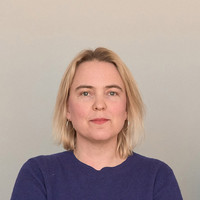
Eva Liedholm Johnson, GA since 2022 and previously programme director for the civil engineering program.
What has been most rewarding during your time as GA?
“Besides it being nice to work together with my GA colleague Malin, the most rewarding thing has been leaving one's own comfort zone and meeting others outside one's own bubble and getting input from many other energetic and pleasant people!”
“Being GA involves very varied work tasks which have also changed over time. The introduction of the Faculty Board in 2024 suddenly meant a shared quality responsibility together with this completely new collegial ABE forum. Also, the major work with educational dimensioning together with education administration manager Tiina Vinter and economist Ulf Arvidsson, as well as the forecasting work in the new allocation system with ceiling amounts, together with programme directors, office staff, and all heads of department, has involved much that is new. I've also worked closely with my GA colleagues at the other schools in the first and second cycle education committee, led by KTH's Dean of Faculty Sofia Ritzén. As GA, you get to work together with so many different functions inside and outside the school. I've had the opportunity to build a network at KTH and also at other universities. Being GA is about developing programmes together with the programme directors who are teachers. We should have education programmes that are relevant, sought-after, and that lead to employment when the student leaves KTH.”
“The main focus of the position is the overall responsibility for the quality of the education programmes. Since I took office, Future Education and related projects have been added, the president has also made decisions about KTH's future educational offerings, policy decisions, and reform agenda. The Faculty Board didn't exist when I started, and the question of dimensioning educational programmes has really gained greater weight, and collaboration with other schools and the dean of faculty about dimensioning and educational offerings has expanded greatly in recent years.”
“We've had good support from leadership support and the education office, and also good collaboration with heads of department, head of school, programme directors, directors of studies, and the faculty board. There are many of us who share work tasks, and operations are built on trust in each other. Malin and I have shared responsibility for ABE School's two main areas, where I have responsibility for civil engineering and Malin for architecture.”
What are your insights regarding prioritized educational issues going forward?
“Since autumn 2024, Daniel Koch has also been deputy GA with a special assignment to review the school's overall educational offerings. His assignment extends to the end of September 2026, and it will contribute to good continuity. The plan is for the new directors of first and second cycle education to be appointed by 1 April at the latest, which allows room for a handover before they begin in their new roles, which is excellent.”
What is your best tip for your successor?
“As GA, you must think that undergraduate education is both interesting and important. Since ABE School is very education-heavy, the GA role is perhaps especially important at our school. But beyond that, it's of course also fundamental to have understanding and interest in the important connection to our research that is conducted and to link together these parts of a university's core activities in a good way.”