Next steps for closer administrative support
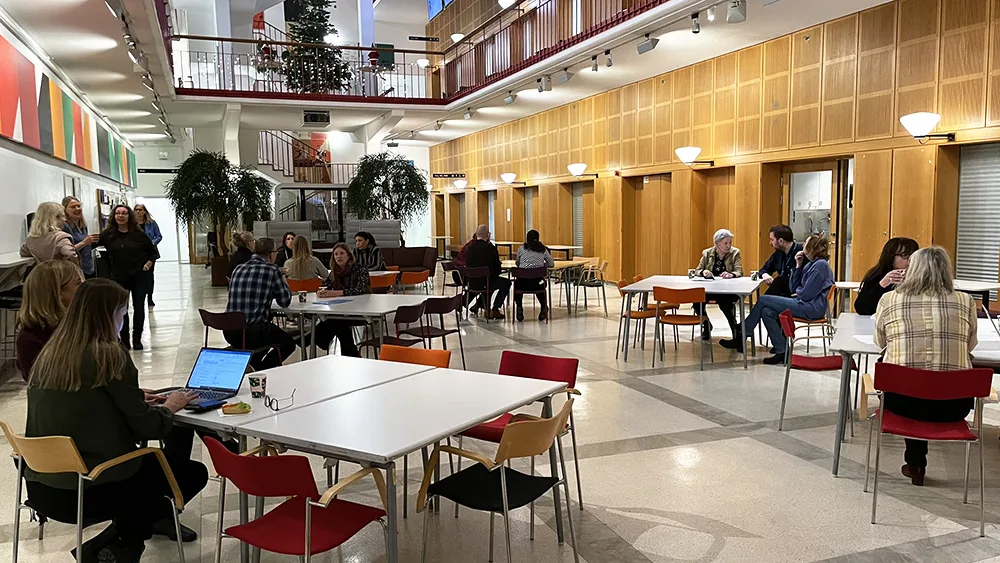
What does it mean to work closely with researchers and teachers when providing support? And what do we need to succeed? These were the main questions when our department based teams met in December. Now the next step is being taken – backed by the workshop results and continued dialogue with managers at the leadership retreat.
In November 2025, it became clearer which team supports each department, even though the working method was already largely in place. The teams consist of an HR generalist, a project economist and a operations controller. When the team members discussed their mission in December, several positive effects emerged: Dedicated teams can create closer collaboration and stronger relationships with the core activities. It can also provide a sense of security for researchers and teachers, knowing that there is not just one person but an entire team to support them in financial and HR matters.
Linda Hedström, Team Manager for Finance ITM, summarises:
“When we work cross‑functionally, it becomes easier to solve complex issues together. It is encouraging to see that the teams themselves recognise so many positive effects of working in this way.”
The teams also believe that increased awareness of processes within different support functions may develop. With closer relationships and more frequent check-ins, both support staff and faculty can gain a better understanding of each other’s competencies and the reasons behind certain ways of working.
Dialogue continues at the leadership retreat
On 15–16 January, during the school’s leadership retreat, the managers of the team members together with Head of School Eva Björndal will listen to the needs of the core activities. The focus will be to:
- Present how the support is organised and which functions are included,
- Discuss which processes could be clarified,
- Identify issues related to system support and improved dialogue between HR, Finance, the Management Office and the core activities.
“We want everything on the table – for example, which system‑related issues we should take forward and which processes need to be clarified,” says Eva Björndal. “After that, we will together prioritise the most important issues.”
The dialogue will continue, both within the teams and between support functions and faculty. The aim is to ensure that nothing falls between the cracks and that the teams learn from one another during the development phase ahead.
Text and photo: Ulrika Georgsson